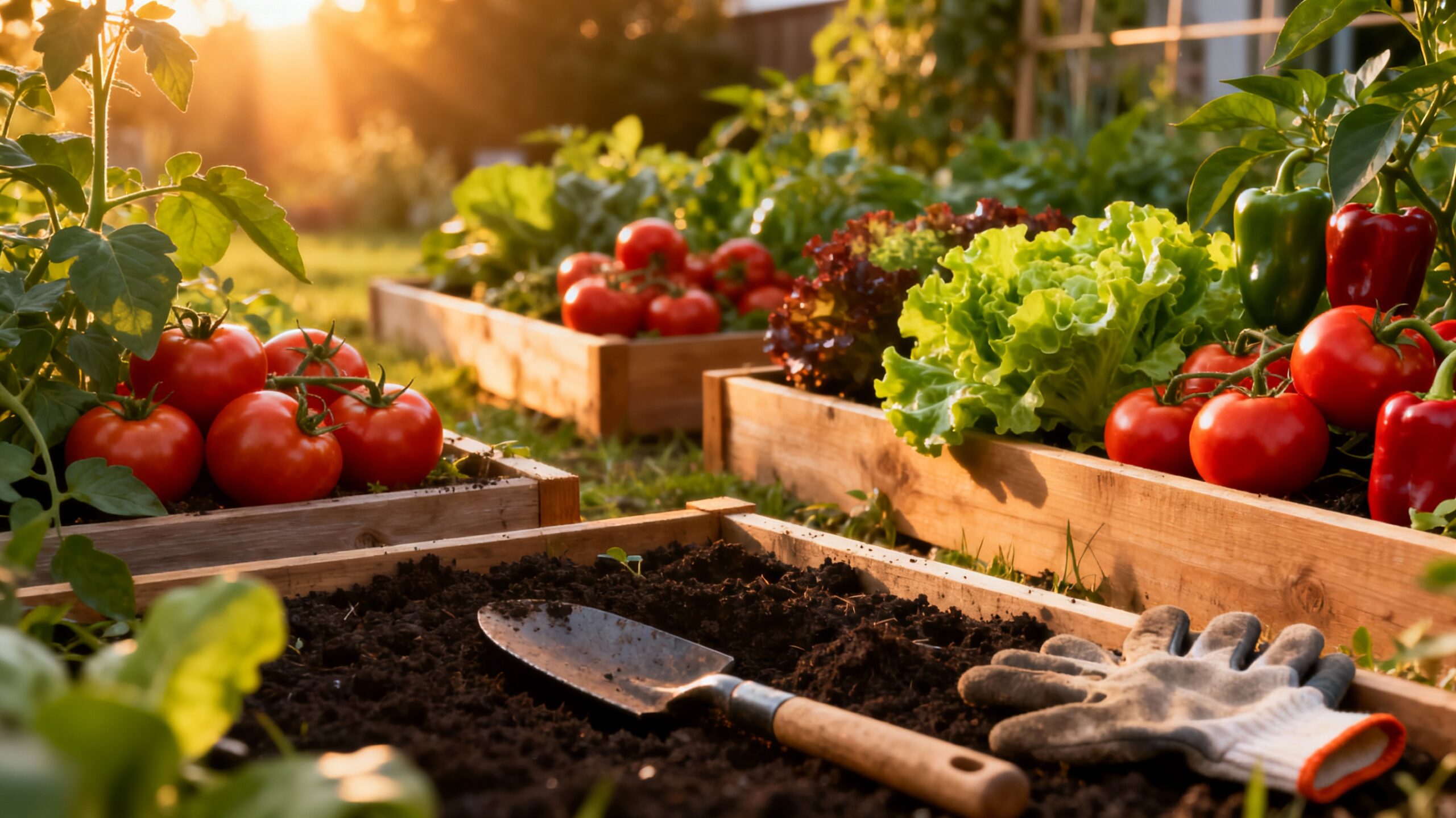
How to Start a Vegetable Garden from Scratch: Ultimate Guide
There is a quiet revolution growing in backyards across the world. More people than ever are discovering the joy, satisfaction, and health benefits of learning how to start a vegetable garden from scratch. Whether you have a sprawling lawn or a modest patch of dirt, growing your own food is one of the most empowering things you can do.
But let’s be honest: staring at a patch of grass and imagining a harvest can be overwhelming. Where do you start? What should you plant? How do you stop everything from dying?
This ultimate guide is designed to take you from “zero” to “harvest.” We will break down the overwhelming process into manageable, bite-sized steps that guarantee success for your first season. Let’s dig in.
Step 1: Pick the Perfect Location
Before you buy a single seed, you need to find the right spot. Your vegetables are picky; they can’t just grow anywhere. To ensure a bountiful harvest, your garden needs three essential things:
-
- Sunlight (Crucial): Most reputable vegetables—tomatoes, peppers, cucumbers, squash—are sun-worshippers. They require at least 6 to 8 hours of direct sunlight daily. Without it, they will be weak and fruitless. If you have a shady yard, stick to leafy greens like spinach and lettuce.
-
- Access to Water: Dragging a heavy hose 100 feet every morning gets old fast. Place your garden as close to a water source as possible. If it’s convenient to water, your plants will survive the summer heat.
-
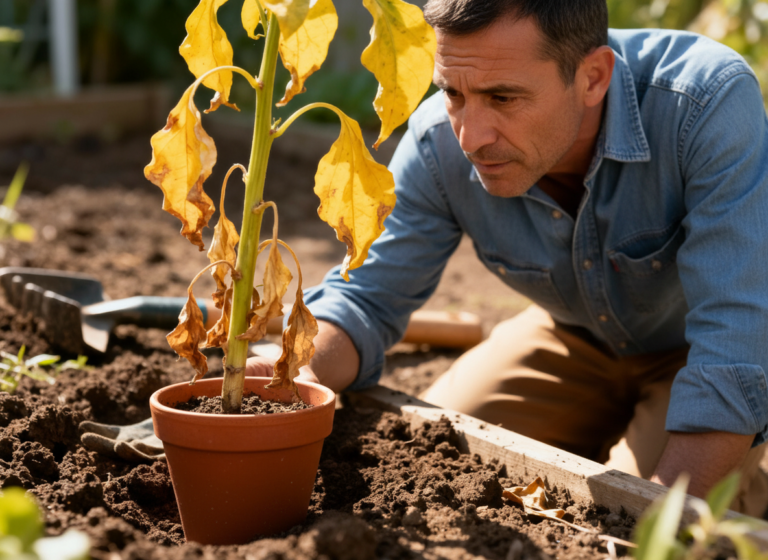
- Good Drainage: Avoid low spots in your yard where water pools after a rainstorm. Vegetable roots need air as much as they need water. If the soil stays soggy, the roots will rot.
Step 2: Decide on Your Garden Layout
Once you have the spot, how will you plant? There are two main methods for beginners:
Raised Beds
This is the gold standard for beginners. You build a box (usually wood) and fill it with fresh, high-quality soil.
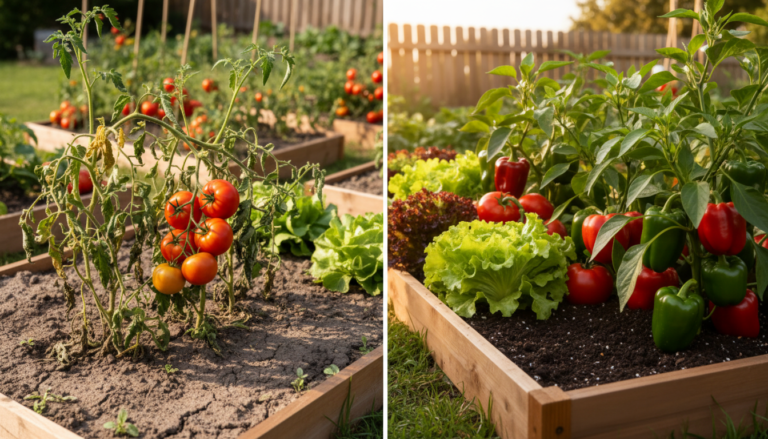
Pros: You control the soil quality instantly; it warms up faster in spring; less weeding; looks beautiful.
Cons: Initial cost of lumber and soil.
In-Ground Rows
The traditional method. You till up the existing grass and plant directly in the earth.
Pros: Very low cost; easy to expand.
Cons: Requires heavy labor to remove sod; native soil might be poor quality (heavy clay or sand); more weeds.
Pro Tip: Start small! A single 4×8 foot raised bed is plenty for a family of four. It’s better to be proud of a small garden than frustrated by a giant weed patch.
Step 3: Prepare Your Soil (The Secret Sauce)
If you take one thing from this guide, let it be this: Feed the soil, not the plants. Healthy soil is teeming with microorganisms that feed your vegetables.
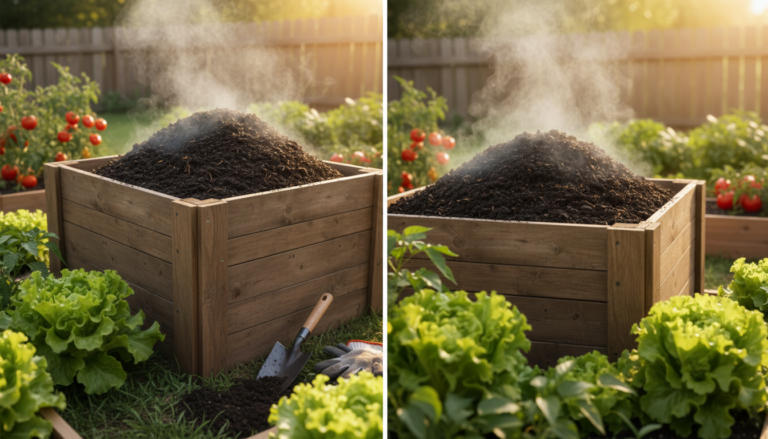
If you are planting in the ground, you likely need to amend your soil. Most backyard soil is too compacted or nutrient-poor for vegetables. Add 2-3 inches of compost or aged manure to the surface and turn it into the top 6 inches of soil. This improves drainage, retains moisture, and adds vital nutrients.
If you are using raised beds, fill them with a mix of:
- 60% Topsoil
- 30% Compost
- 10% Potting soil or Peat moss (for fluffiness)
Step 4: Choose What to Plant
This is the fun part! Browse seed catalogs or the garden center. However, be realistic. Don’t plant things you don’t like to eat. If you hate radishes, don’t grow them just because they are easy.
Top 5 Easiest Vegetables for Beginners:
-
- Lettuce: Grows fast, takes up little space, and you can harvest leaves continuously.
-
- Green Beans (Bush): Heavy producers that don’t need a trellis.
-
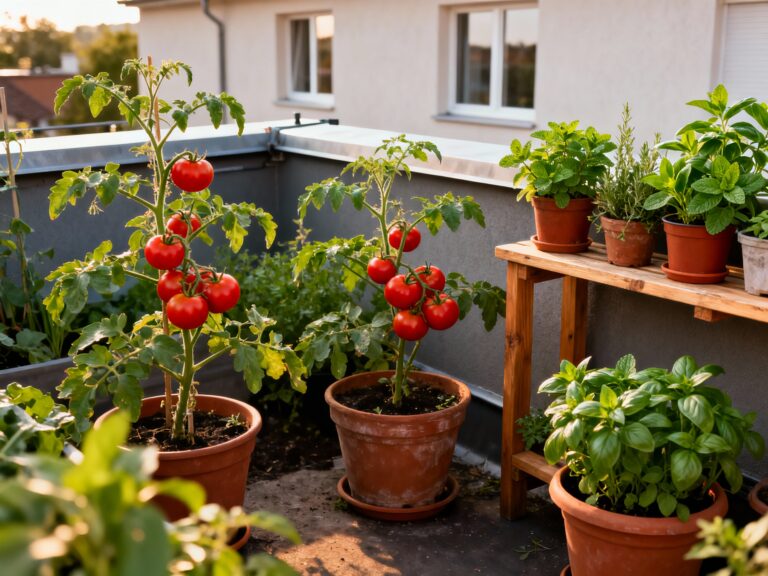
- Tomatoes: Buy these as small plants (transplants) rather than seeds for easier success.
-
- Zucchini: Very productive (you only need one or two plants!).
-
- Peppers: Like tomatoes, buy these as transplants. They love the heat.
Step 5: Seeds vs. Transplants
Should you plant a seed in the dirt, or buy a small plant from the nursery?
-
- Direct Sow (Seeds): Best for fast-growing crops or root vegetables that hate being moved.
Examples: Carrots, Radishes, Beans, Peas, Corn, Lettuce.
- Direct Sow (Seeds): Best for fast-growing crops or root vegetables that hate being moved.
-
- Transplants (Baby Plants): Best for warm-season crops that take a long time to mature. In many climates, the summer isn’t long enough to grow a tomato from seed outdoors.
Examples: Tomatoes, Peppers, Eggplant, Cabbage, Broccoli.
- Transplants (Baby Plants): Best for warm-season crops that take a long time to mature. In many climates, the summer isn’t long enough to grow a tomato from seed outdoors.
Step 6: Planting Time
Timing is everything. Planting a tomato in the frost will kill it. Planting lettuce in a heatwave will make it bitter.
Check your local frost dates.
Cool Season Crops (Spring): Plant these a few weeks before the last frost (Peas, Spinach, Lettuce).
Warm Season Crops (Summer): Plant these after all danger of frost has passed and the soil is warm (Tomatoes, Peppers, Cucumbers).
Step 7: Maintenance (Watering & Weeding)
Your garden isn’t a “set it and forget it” machine. It needs care.
Watering: Plants need about 1 inch of water per week. If it doesn’t rain, you must water. It’s better to water deeply and less often (like twice a week) than to sprinkle a little bit every day. Deep watering encourages deep root growth.
Weeding: Weeds steal water and nutrients from your vegetables. Pull them when they are small! A layer of mulch (straw or shredded leaves) around your plants will block sunlight and stop weeds from germinating. Mulch also keeps soil moisture from evaporating.
Step 8: Harvest and Enjoy!
This is the payoff. Harvesting is an art form. Generally, the more you harvest, the more the plant produces.
Leafy Greens: Harvest the outer leaves so the center keeps growing.
Beans/Cucumbers: Pick them when they are small and tender. If they get too big, the plant stops producing.
Tomatoes: Pick when fully colored and slightly soft to the touch.
Learning how to start a vegetable garden is a journey. You will make mistakes, and that’s okay. Next year, you’ll know better. But nothing beats the feeling of serving a salad solely from ingredients you grew yourself. Happy planting!