Composting for Beginners: How to Make Black Gold at Home
There is a magical process happening in nature constantly. Leaves fall, fruits rot, and eventually, they disappear into the earth, feeding the next generation of plants. As gardeners, we can hijack this process to create the single best substance for our vegetable garden: Compost.
Often called “Black Gold,” compost is more than just fertilizer. It improves soil texture, holds moisture, and introduces billions of beneficial microbes. Best of all? It’s completely free and reduces your household waste. In this composting for beginners guide, we will show you how to start your own pile today.
Table of Contents
What Exactly is Compost?
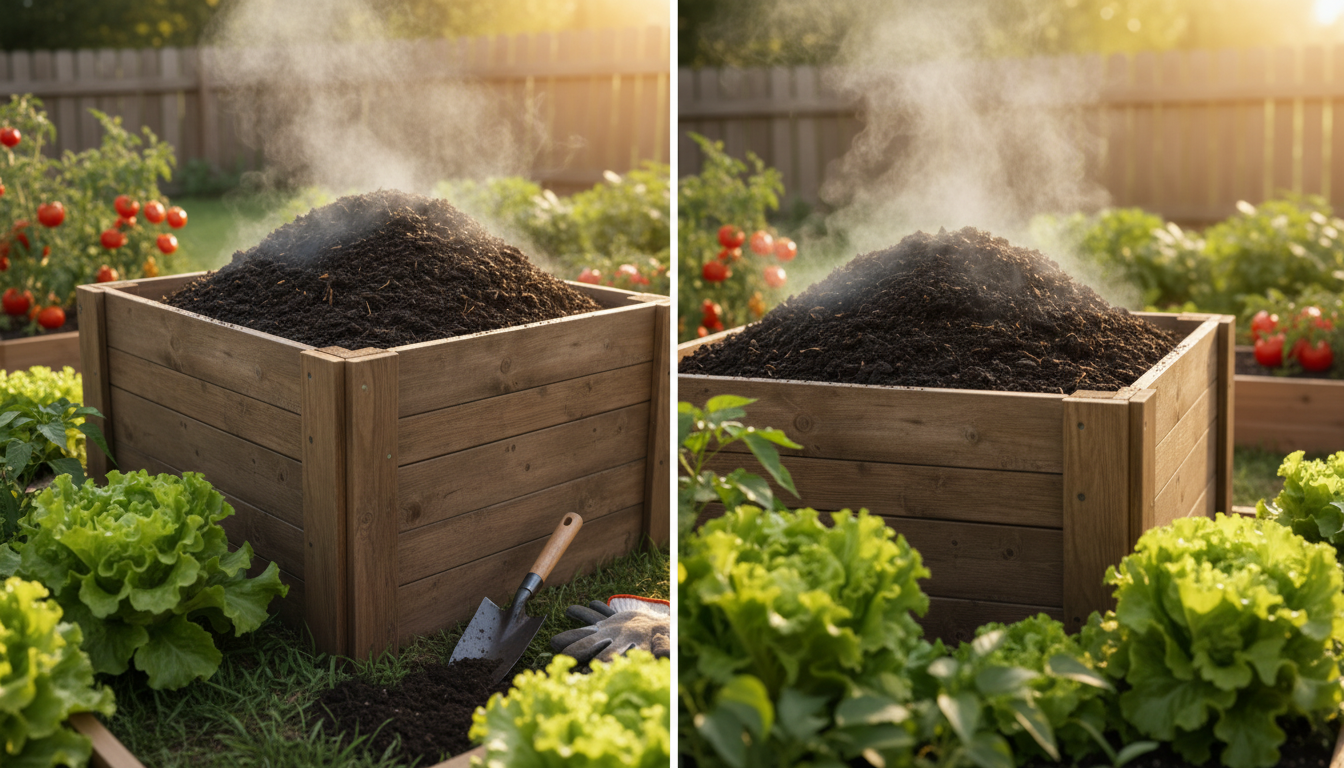
Compost is simply organic matter that has decomposed. When you pile up leaves, grass clippings, and apple cores, bacteria and fungi go to work breaking them down. The result is a dark, crumbly, earth-smelling material that is pure vitamins for your plants.
The 4 Essential Ingredients
A successful compost pile needs four things to work effectively:
- Greens (Nitrogen): These are wet, fresh materials.
- Vegetable scraps & fruit peels
- Coffee grounds (even the paper filters!)
- Fresh grass clippings
- Tea bags
- Browns (Carbon): These are dry, woody materials.
- Dry leaves
- Cardboard & Straw
- Newspaper (shredded)
- Sawdust
- Water: The microbes need moisture to survive. Your pile should feel like a wrung-out damp sponge.
- Air: Most bad smells come from a lack of oxygen. Turning your pile introduces air.
What NOT to Compost
While everything decomposes eventually, you should keep these items OUT of a simple home compost pile to avoid pests and bad odors:
- ❌ Meat, Dairy, or Bones: They smell terrible and attract rats and raccoons.
- ❌ Oils and Greases: Act as a preservative and slow down the process.
- ❌ Pet Waste (Dog/Cat poop): Can contain harmful parasites.
- ❌ Diseased Plants: The heat of a home pile might not kill the disease, and you don’t want to spread it back to your garden.
How to Start: 3 Simple Methods
1. The “Lazy” Pile (Cold Composting)
Best for: People with space and patience.
Just pile your leaves and scraps in a corner of the yard. Forget about it. In 6 to 12 months, the bottom will turn into soil. It’s slow, but zero effort.
2. The Tumbler (Hot/Active Composting)
Best for: Suburban backyards.
Buy a plastic compost tumbler. Fill it with a mix of greens and browns. Spin it every few days to mix air in. Because it’s enclosed, it heats up faster and can produce compost in as little as 4-8 weeks.
3. Vermicomposting (Worm Bin)
Best for: Apartments or indoors.
You use a plastic tote filled with Red Wiggler worms. They eat your kitchen scraps and poop out “worm castings,” which is the most potent fertilizer on earth. It’s odorless if done right!
The Golden Ratio
If your pile smells like rotting garbage, you have too many “Greens” (Nitrogen). Add more dry leaves or cardboard.
If your pile is just sitting there doing nothing, you have too many “Browns” (Carbon). Add more kitchen scraps and water.
Aim for a ratio of 3 parts Brown to 1 part Green.
Troubleshooting Your Pile
| Problem | Cause | Solution |
|---|---|---|
| Bad Smell (Ammonia) | Too much Green (Nitrogen) | Add dry leaves or cardboard |
| Bad Smell (Rotten eggs) | No oxygen (Anaerobic) | Turn the pile with a fork |
| Nothing is happening | Too dry or too cold | Add water and more fresh scraps |
| Pests / Flies | Exposed food | Bury food scraps deep in the center |
Composting creates a closed loop in your home. Your kitchen waste feeds the soil, the soil feeds the plants, and the plants feed you. It is a satisfying cycle that saves money and helps the planet. Start your pile this weekend!